
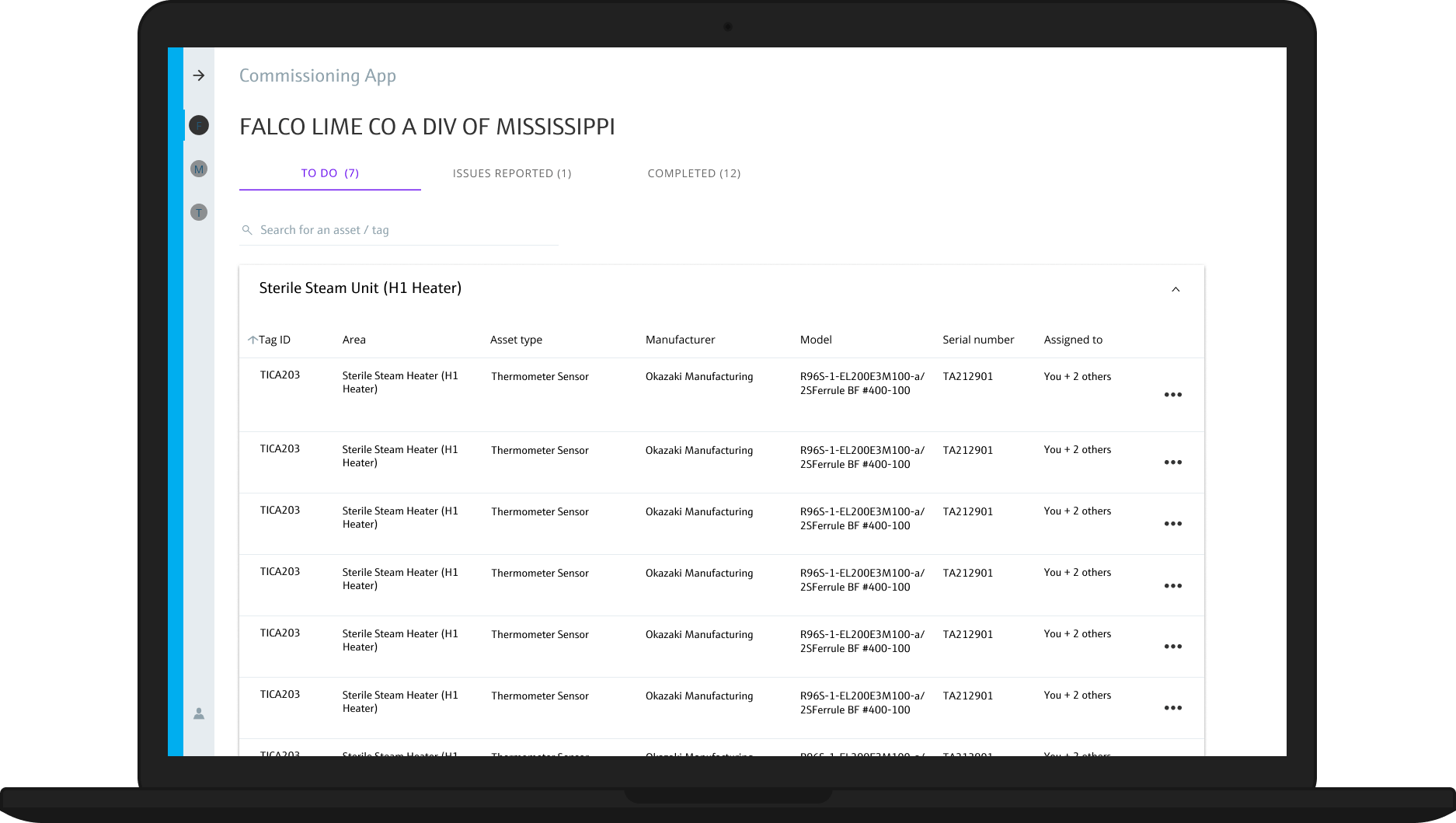
Through user interviews, Field Service Technician shadowing, and an ongoing exploration of how to translate manual processes into a digital solution, an application standardizing the commissioning process took shape and is steadily being introduced to the field.
The Challenge
Prior to the development of the commissioning application, the device manufacturer’s heavy reliance on paper reporting in the device commissioning process translated to missed opportunities - in building a more robust competitive advantage in project acquisition, and in gathering actionable device data at the time of commissioning. They came to the realization that process modernization was the key to tapping these opportunities, but there were numerous hurdles to overcome.
A primary hurdle with process modernization was the ultimate flexibility that all-paper reporting provided. In any given project, checklists could be structured on an ad hoc basis, completed in any given order, and any device issues uncovered had to be dealt with at the Project Manager’s prerogative. With such flexibility, and with the inherent danger of limiting that flexibility by digitizing commissioning operations, fleshing out business requirements to inform the application’s development, and also ensuring optimal end-user adoption were the central challenges.
Further contributing to this challenge was that the application’s primary group of end-users would be third-party vendors who contract with the device manufacturer to execute plant startups, each conducting commissioning work in its own nuanced fashion. To achieve success, the nuanced processes of these vendors would have to be reconciled and business requirements would have to be fleshed out in a balanced manner in order to cast a compelling vision for the evolution of the commissioning process.
Approach
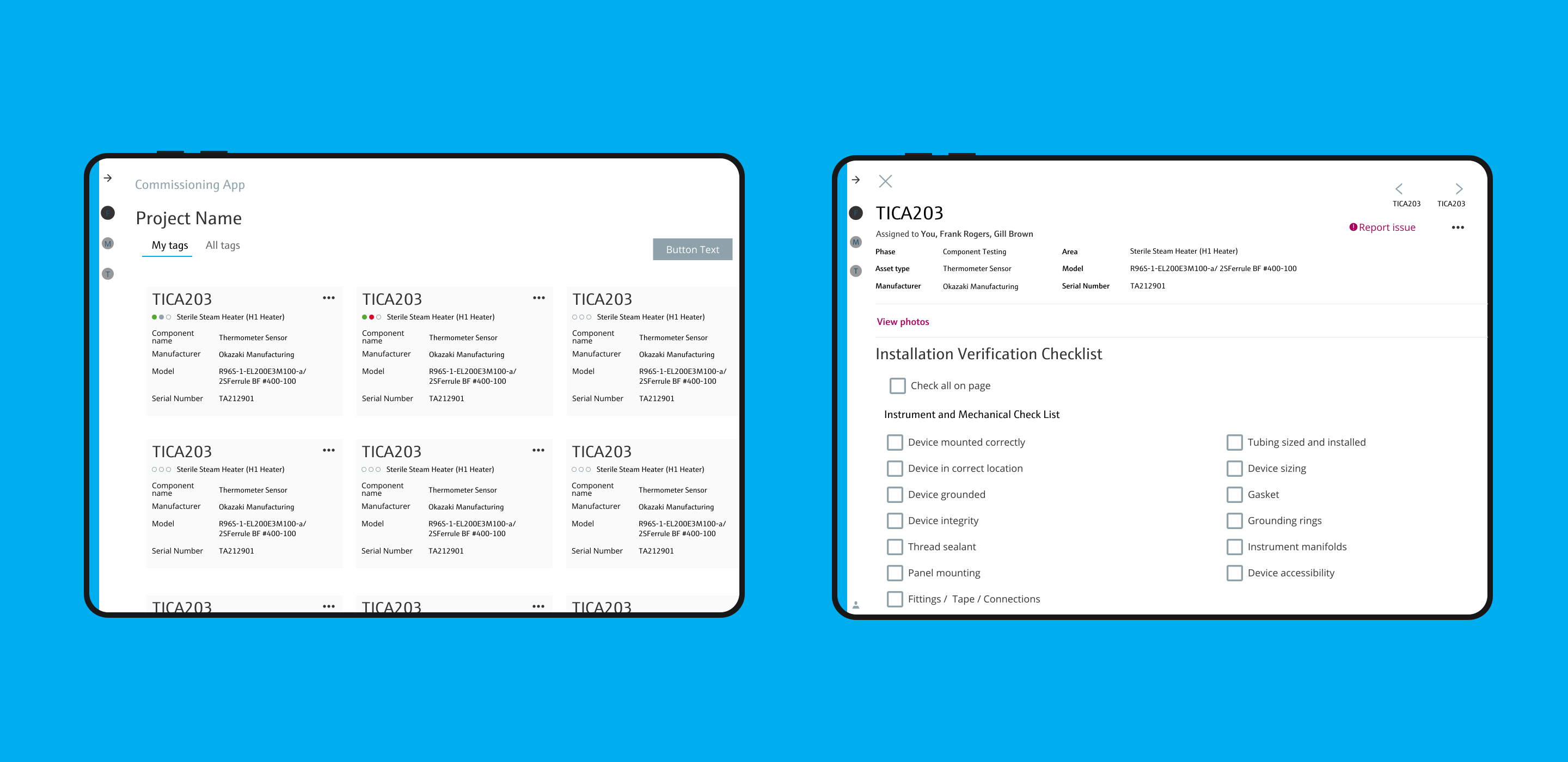
Seeking a more effective and efficient way to capture and utilize commissioning data, the device manufacturer partnered with DeveloperTown to develop an application to replace pen and paper in the hands of their Field Service Technicians. By capturing commissioning data digitally, the following would be made possible:
More extensive data mining opportunities translating to increased sales revenue both in terms of commissioning project acquisition and device sales
More robust customer device management in their proprietary IIOT platform
Improved efficiency and project management and real-time project KPIs on the ground during commissioning projects
Solution
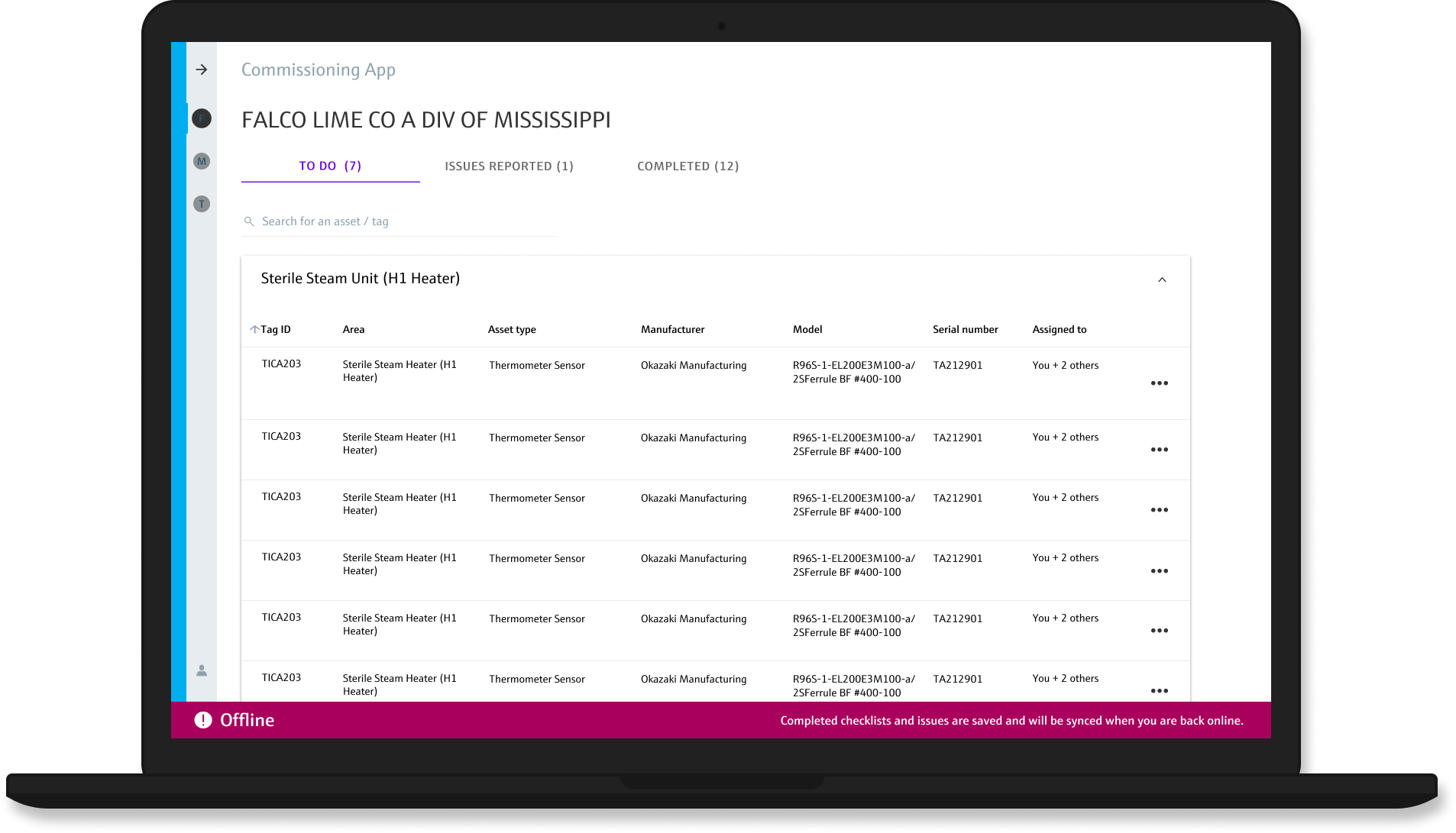
To assist the device manufacturer in overcoming these hurdles and realize the value process modernization could provide, DeveloperTown began with discovery, working with stakeholders from both the device manufacturer as well as the third-party vendors responsible for carrying out commissioning projects, to uncover and define the business requirements for the application. Through user interviews, Field Service Technician shadowing, and an ongoing exploration of how to translate manual processes into a digital solution, an application standardizing the commissioning process took shape and is steadily being introduced to the field.
With the commissioning application now rolled out and in the hands of Field Service Technicians, the road to increased value has been paved and the device manufacturer’s customer intrigue is on the rise. Already new ideas for application enhancements and expansion are rolling in and being prioritized. All this is to say: the future of commissioning appears bright!
Looking for an Experienced Process Automation Partner for Your Organization?
The phrase “Digital Transformation” is everywhere these days, but what does it really entail? How do you know a probable candidate for Process Automation when you encounter it? At DeveloperTown, we recognize repeatable manual processes that are prime for no-code, low-code, or robotic process automation (RPA) solutions.